
The coastal marshes of Charente-Maritime
Charente-Maritime coastal marshes
A territory shaped by tides, winds and the hand of man
Along the Atlantic fringe, Charente-Maritime unfolds a landscape where the horizon always seems to hesitate between land and water. Here, the coastal marshes are not mere scenery: they are a living, shifting material, made up of canals, tidal creeks, wet meadows, mudflats and salt marshes. Their geometry, sometimes very regular, tells of centuries of development—dykes, polders, saltworks, basins and hydraulic structures. Their apparent tranquillity masks a constant dynamic: tides, salinity, floods, summer evaporation and storms continually reshape the balance between fresh water and salt water.
The Charentais coastal marshes spread out like a mosaic around estuaries, bays and islands: the Aunis area and the Bay of Yves, the outskirts of La Rochelle, the Rochefort marshes, the wetlands linked to the Charente, the Brouage and Seudre marshes, not forgetting the large complexes of the islands (Ré, Oléron, Aix) and the fringes of the Gironde estuary on the northern side. Each complex has its signature: here the imprint of the old saltworks, there the vast meadowland for livestock farming, further on the oyster-farming ponds with pewter-like reflections. These are threshold landscapes, where human uses have long sought to work with water rather than constrain it completely.
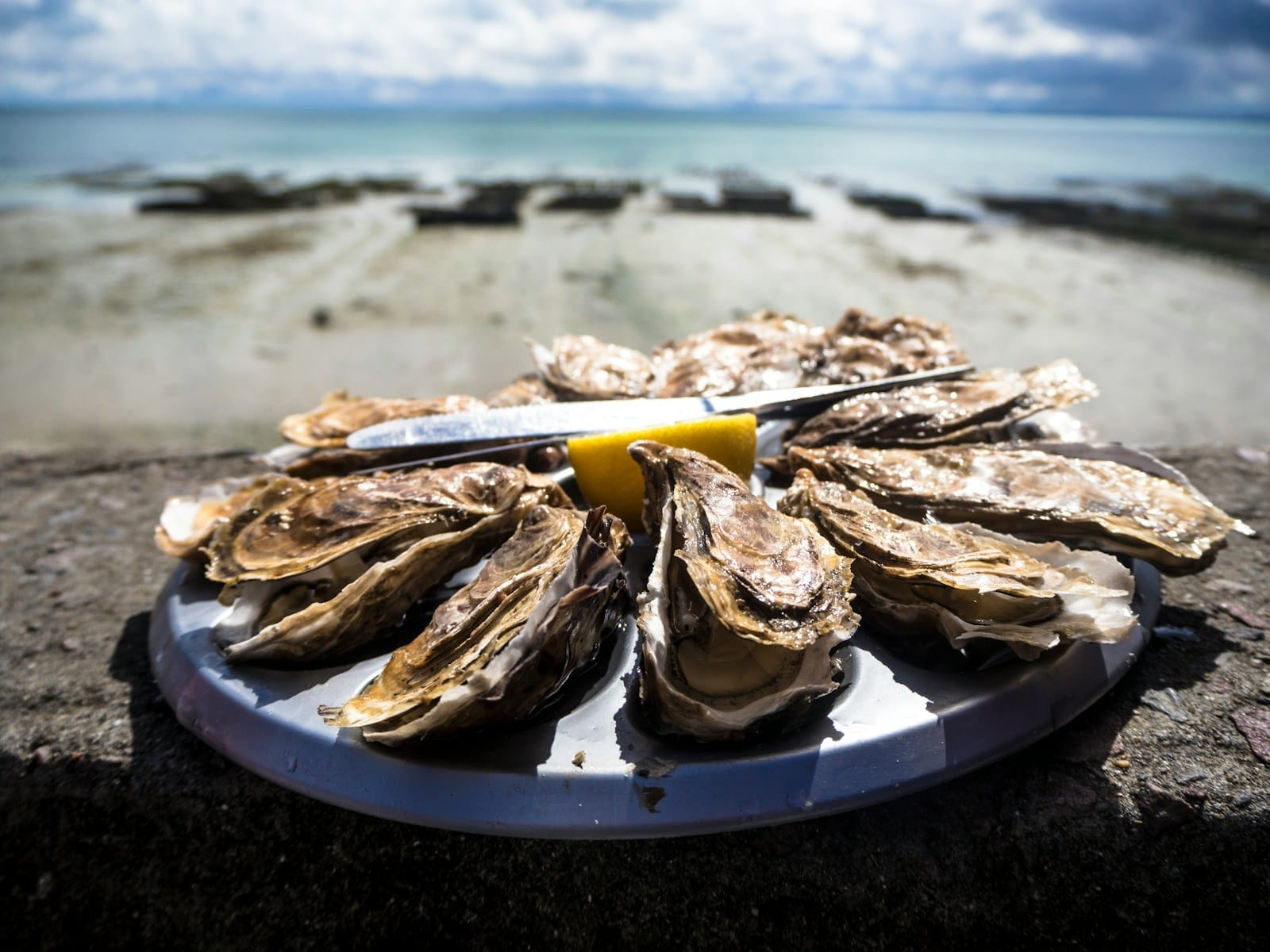
Water landscapes: tidal creeks, dykes, salt marshes and oyster ponds
Travelling through these spaces, you quickly understand that everything begins with the movement of water. The tidal creeks—these natural or engineered channels—distribute flows between the sea, the basins and the meadows. The dykes protect land reclaimed from the ocean, but they are also dividing lines that create gradients: on one side, the sea and its mudflats; on the other, wet plots with regulated water levels. This hydraulic system, often unobtrusive, governs vegetation, the hosting of wildlife, agricultural production, and even the perception of the landscape.
The salt marshes are one of the most remarkable transitions. Regularly submerged by the tides, they host plants adapted to salt, low-growing or in tufts, forming a carpet that changes with the seasons. In spring, pale green hues dominate; by late summer, some areas turn red and purple, as if the marsh were gently igniting. Nearby, the mudflats serve as a larder for thousands of birds. Further inland, the gentler wet meadows host different flora, insects, amphibians, and sometimes herds whose grazing keeps these environments open.
Lastly, the ponds and basins linked to oyster farming—particularly visible around Marennes-Oléron and the Seudre—add a cultural and economic dimension. These shallow basins are not only places of production: they also structure the landscape, reflect the sky, and create micro-habitats. The walker then observes a worked marsh, where water becomes a tool, a resource and a heritage.
Biodiversity: a major crossroads for birds, fish and halophilic plants
Your hotel in Châtelaillon-Plage
Coastal marshes are renowned for their biological richness because they lie at the meeting point of several worlds. Migratory birds find essential stopovers there: waders in search of mudflats rich in invertebrates, ducks and geese benefiting from flooded areas, terns and gulls exploiting coastal resources. Changes in water levels, dictated by tides and hydraulic management, multiply niches: reedbeds, meadows, lagoons, ditches, mudflats, salt marshes.
In the channels and estuarine zones, many fish species use these environments as nursery grounds. Salinity gradients, varying with the seasons and river inputs, allow euryhaline species to move about, reproduce, or grow sheltered from heavy swell. Amphibians, for their part, benefit from temporary fresh water, while insects—dragonflies, aquatic beetles, wetland butterflies—form a living network that is often underestimated, but crucial.
The flora, finally, tells a story of adaptation. In salty sectors, halophilic plants withstand salt and wind. Further on, reedbeds stabilise the banks and shelter teeming life. Botanical diversity depends heavily on water management: a level that is too stable can make the environment banal; prolonged drying encourages scrub encroachment; excessive salinisation transforms plant communities. Richness therefore owes as much to nature as to the way it is cared for.
To explore the characteristics and distribution of these complexes at regional scale in more depth, you can consult the following resource: The coastal marshes of Charente-Maritime.
History and uses: saltworks, polders, livestock farming and oyster farming
The marshes of Charente-Maritime carry the memory of old trades. Saltworks, for example, long structured the islands and shorelines. Where salt production has declined, traces remain: alignments of basins, small dykes, canals, place names. Some areas have been converted into fish-farming marshes, oyster ponds, or grazing land. Others, less exploited, have evolved towards more natural environments, where vegetation gradually reasserts itself.
Polders and embanked land bear witness to a desire to gain agricultural land, sometimes at the cost of constant maintenance. A dyke is never guaranteed: it must be monitored, repaired, reinforced. Storm episodes regularly remind us of the vulnerability of these low-lying areas. In wet meadows, extensive livestock farming plays an ecological role: grazing maintains open habitats favourable to certain species of nesting birds, and limits scrub encroachment. The balance is subtle: too much pressure degrades the soil; too little lets the marsh close up.
Oyster farming, for its part, intimately links the marshes to the harbours, channels and inlets. Finishing ponds, water circulation, the quality of inputs, maintenance of the structures: all this is part of local know-how. The marsh then becomes a production space, but also a landscape of identity, tied to huts, jetties, dyke paths and the silhouettes of the oyster beds.
Contemporary vulnerabilities: submergence, salinisation and development pressure
These environments are beautiful because they are fragile. Rising sea levels, the increased frequency of extreme events, and coastal erosion heighten the risk of flooding. In embanked areas, the issue is not only holding out against the sea, but choosing a strategy: strengthen, adapt, retreat, or sometimes accept a partial reconquest by salt water. Each option has consequences for agriculture, homes, biodiversity and economic activities.
Salinisation can also increase, especially during prolonged droughts combined with marine intrusions. Freshwater marshes, if they are not properly supplied, see their functioning change. Water quality becomes a major issue: nutrient inputs, pesticides, turbidity, bacteria. In environments where everything circulates, impacts spread quickly, including as far as shellfish-farming areas.
Added to this is pressure on land along the coast. Residential and tourist appeal is strong, notably around La Rochelle, the Île de Ré, Oléron, and the seaside resorts. The marshes, often seen as empty spaces available, are in fact natural infrastructure: they store water, buffer floods, filter certain pollutants, and provide refuges for wildlife. Preserving them does not mean freezing the area: it means maintaining vital functions.
Walking, observing, understanding: sensory experiences through the seasons
Visiting a coastal marsh means accepting to slow down. You don’t tick off a list of monuments there: you let yourself be guided by the lines of water, the light, the wind, the tides. The best moments are often the simplest: a sunrise over the oyster ponds, the passage of a cloud of birds above a reed bed, the shimmering of water in a still ditch. The seasons transform the atmosphere: winter opens up broad vistas, summer intensifies colours and insects, spring resonates with song, autumn multiplies migratory arrivals.
Your hotel in Châtelaillon-Plage
For respectful observation, a few principles matter: stay on the dyke paths, avoid approaching nesting areas, keep a distance from the birds, keep dogs on a lead, and favour discretion. In these open landscapes, human presence can be seen from far away. The quality of the experience often depends on this ability not to take up all the space. In return, the marsh offers an intimate reading of the coastline: a coastline that is not spectacular, but profound, built by balance.
The marsh as a gateway to a cultural coastline
The marshes of Charente-Maritime are not isolated: they converse with towns, ports, beaches and islands. After a day of observation, it is natural to extend the discovery through other facets of the area. The nearby towns, in particular, offer a stimulating counterpoint: architecture, museums, markets, artistic scenes. For those who like to alternate nature and culture, an inspiring stop can be Street art and galleries in La Rochelle, which shows how urban creativity responds, in its own way, to maritime identity.
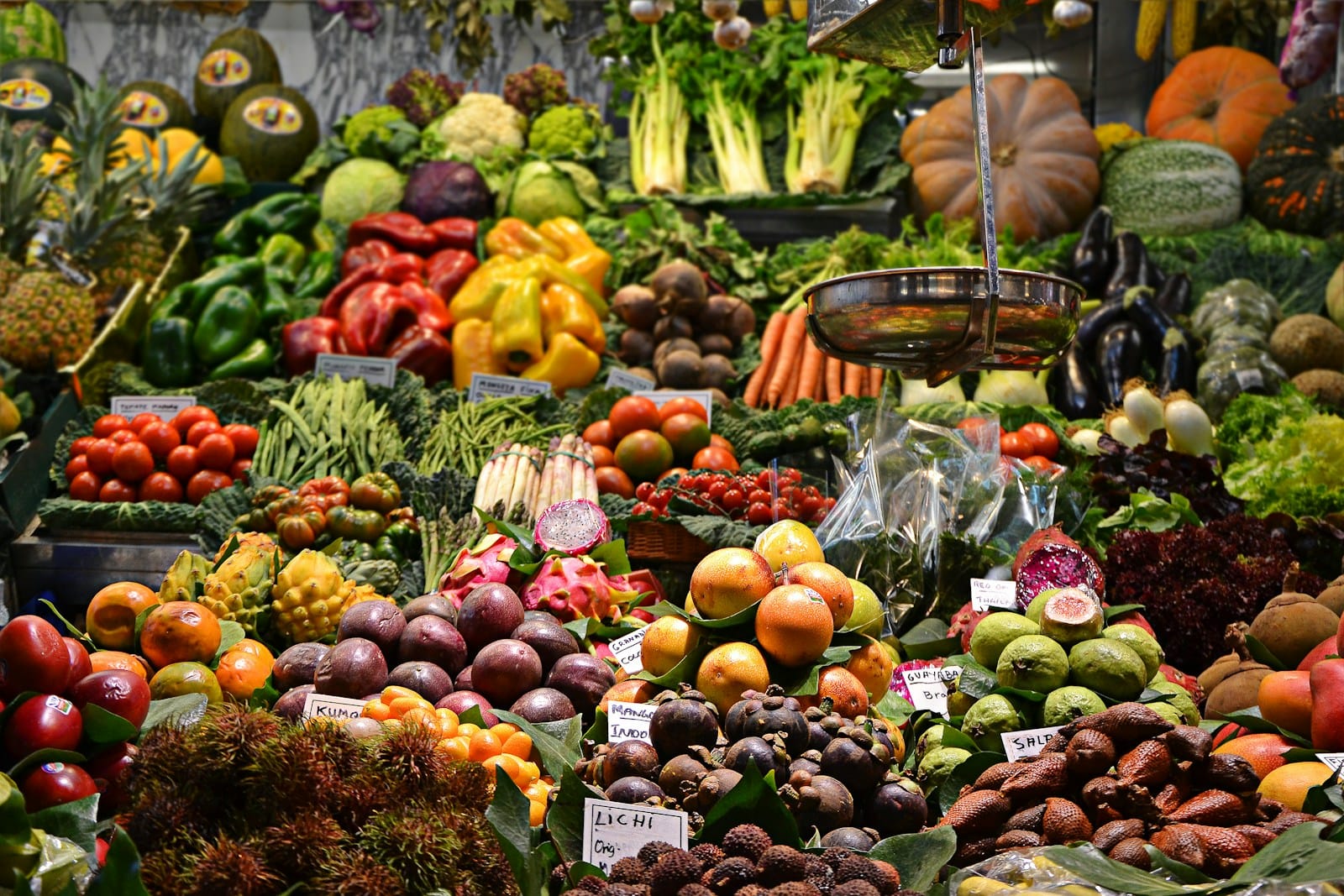
The link between marsh and plate is just as obvious. Products from the coast and wetlands find their way into local kitchens: oysters, mussels, fish, samphire, and recipes that tell the story of the port, fishing and markets. To plan a foodie itinerary, Culinary specialities of La Rochelle offers a useful lead for putting words — and cravings — to what the area has to offer.
Ports, channels and estuaries: an obvious continuity
The marshes cannot be understood without the ports. The channels that wind through the mudflats, the small tidal creeks that feed the basins, and the drainage canals extend towards areas of activity where people repair, load, unload, sell. The gesture of the marshes — opening a sluice gate, dredging a ditch, monitoring a water level — resonates with the gesture of the port — putting to sea, hauling up a net, sorting a catch, preparing a tide. This continuity is particularly visible in shellfish-farming areas and on certain estuarine banks.
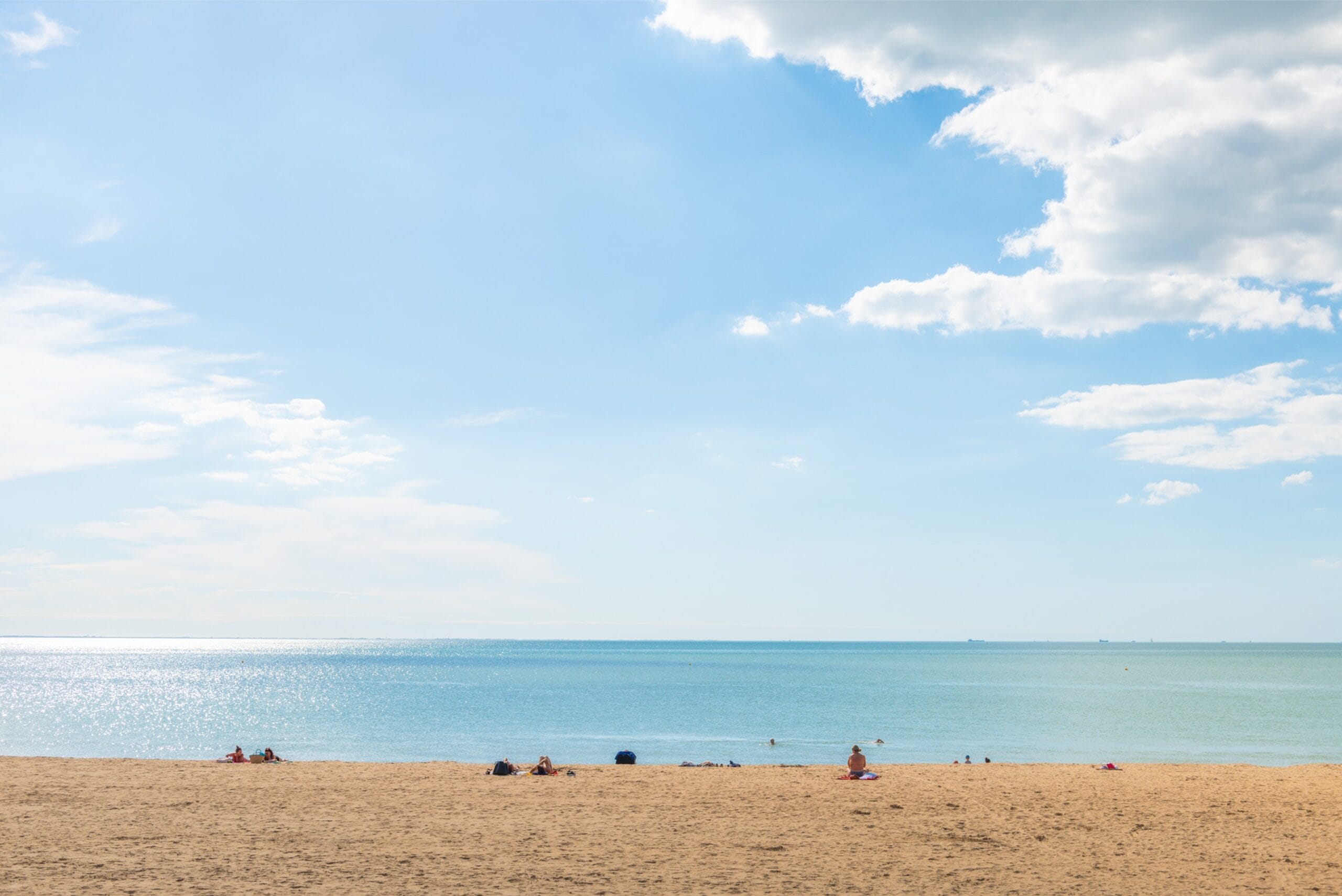
To better grasp this maritime culture, a complementary read could be Discover the fishing ports of Charente-Maritime, which makes it possible to link the fresh and salt water landscapes to the places where the ocean becomes a livelihood.
Routes: linking the marshes, the beaches and the villages
One of the pleasures in Charente-Maritime is to move, in just a few kilometres, from a silent dyke to a lively beach, from a reed-lined canal to a village of pale stone, from a hide to a terrace facing the ocean. For those who want to organise a coherent route, the best approach is to think in terms of groups: a morning in the marshes of a given area, lunch by the port, then an end of day on the coast or in a neighbouring town. This alternation avoids the fatigue of long journeys and makes the discovery richer.
To imagine this kind of route without losing the thread of the coastline, Coastal road trip in Charente-Maritime can serve as a basis, adding marsh breaks according to your desire for observation and walking.
To recharge: water as energy, the coast as breathing space
Marshes are calming by nature: they invite tranquillity, a long gaze, a form of presence. After hours walking along dike paths, scanning a reed bed, or following the slowness of a tide, many feel the need for another relationship with water: more enveloping, more restorative. The Charente coastline lends itself to this, with swims, sea air and fitness activities.
To extend this feeling of relaxation near the shore, Wellness and thalassotherapy near Châtelaillon-Plage offers ideas oriented towards recovery and care, in keeping with the water-and-horizon spirit specific to the area.
Preparing a getaway: staying near the marshes and getting around easily
Exploring the marshes sometimes means setting off early, catching a favourable tide, or treating yourself to the luxury of an evening in the low light. Having a well-located base, between coastal access and proximity to the major sites, makes the experience easier: you avoid detours, you can more easily improvise an outing at daybreak, and you can mix and match nature, harbour, town and beach over several days.
Your hotel in Châtelaillon-Plage
To organise your stay and book easily, you can consult Your hotel in Châtelaillon-Plage.
A living heritage to protect, a landscape to learn
The coastal marshes of Charente-Maritime are neither secondary backwaters nor simple nature reserves: they are complete systems, where ecology, history, economy and culture echo one another. You can read in them the patience of generations who have organised the water, the creativity of maritime activities, and the quiet power of natural cycles. To travel through them is to understand that the coast is not limited to beaches: it also lies in these low-lying expanses, sometimes austere, often luminous, always essential.
At a time when the climate and the sea impose new trade-offs, these marshes invite a form of territorial intelligence: accepting the mobility of the coastline, preserving areas for water expansion, supporting compatible uses, and maintaining ecological continuities. They remind us that a landscape is not a fixed image, but a fragile agreement between natural forces and human choices. In Charente-Maritime, this agreement is played out at water level, where each tide quietly rewrites the border between land and the Atlantic.