
Birdwatching near Châtelaillon-Plage
birdwatching chatelaillon beach
A living coastline to explore from dawn
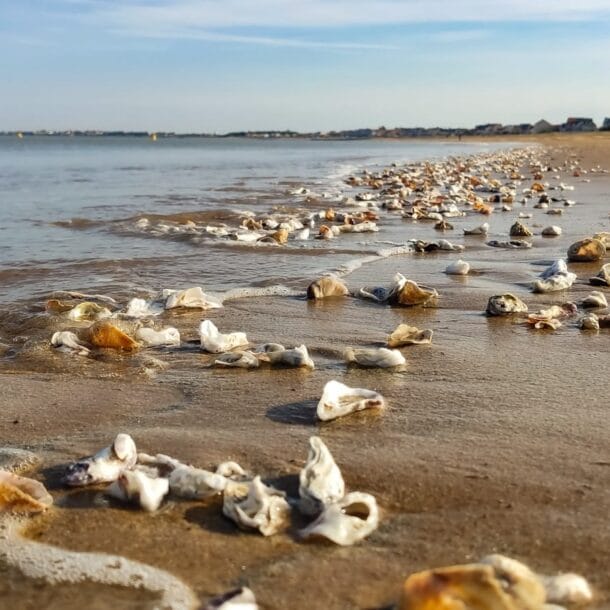
In Châtelaillon-Plage, the day often begins with a soft light that glides over the foreshore, reveals the mudflats and brings the horizon line to life. It is precisely this moment—when the sea retreats or returns—that sets the tempo for the birds. Here, there is no need to go very far to feel the energy of the coastline: the comings and goings of waders at the water’s edge, the silhouettes of gulls above the waves, terns on the hunt and discreet passerines in the dunes create a constantly changing spectacle, sometimes minute by minute.
Watching near Châtelaillon-Plage means accepting that the scene is mobile: the tide dictates distances, the wind alters trajectories, and the weather transforms the colours. This makes each outing unique, even on the same spot. To put all the chances on your side, two variables matter more than anything: timing (ideally early in the morning or late afternoon) and the tide level (often more interesting when the sea retreats widely, because the birds gather to feed).
The best times: tides, seasons and weather
The Charente coastline is a territory of passage and stopover. Depending on the seasons, you will not see the same species, nor the same behaviours. In winter, many birds gather in areas rich in food; in spring, displays and song increase; in summer, some species nest or raise their young; in autumn, migrations create sometimes impressive movements.

The tide is your ally. On an ebb tide, feeding areas expand and waders spread out; on a flood tide, they gather and move closer to resting areas, often easier to scan. After a gust, expect surprises: seabirds can be pushed closer to the coast. Conversely, in very bright weather, glare on the water can hinder observation: a cap and polarised sunglasses then become valuable companions.
Where to settle around Châtelaillon-Plage: simple and effective spots
The strength of Châtelaillon-Plage is the variety of atmospheres within a short distance: beach, wetlands, mudflats, meadows, canals, dunes. For an easy outing, start with an open viewpoint with a wide horizon: you will quickly spot bird movements and the logic of the tide. Then, add a second, more sheltered place (marshes, reedbeds, ditches) where more discreet species hide.
To broaden your ideas for outings in the department, you can also consult this very practical guide to places of interest: where to watch birds in Charente-Maritime?. . It makes it possible to visualise the diversity of sites and organise a small itinerary according to your wishes (family outing, looking for particular species, observation with a telephoto lens, etc.).
The Yves marshes: a must-see very close to the beach
Just a few minutes away, the marshes offer a striking contrast with the seafront: here, the atmosphere is more muted, paced by canals, wet meadows and reedbeds. You often see wading birds, ducks, herons, and a multitude of species that benefit from the mosaic of habitats. The real pleasure is the possibility of alternating between grand landscape and details: a flight crossing the sky, then a motionless silhouette at the edge of calm water.
Your hotel in Châtelaillon-Plage
If you like understanding habitats as much as ticking off species, a good starting point is this internal page dedicated to the region’s wetland landscapes: The coastal marshes of Charente-Maritime. . It helps to put what you see on site into context: the influence of salt water, the value of floodable areas, and why these spaces attract so many birds throughout the year.
To prepare for a guided nature outing (often richer, especially during migration periods), you can look at the Programme of visits. . Supervised outings provide access to a more nuanced reading of the terrain: behaviours, identification techniques, the day’s conditions, and respect for sensitive areas.
Common species: learning to look rather than to search
By the seaside, certain birds are almost always present: herring gulls, gulls, cormorants, terns depending on the season. In the marshes, you will regularly come across herons (grey heron, egret), ducks and, when migration is in full swing, groups of waders. But the secret to making fast progress is not to chase after a rare species: it is to practise observing what is already there.
Start by noting three things before you even think about the name: size (small like a sparrow, medium like a pigeon, large like a heron), silhouette (long or short legs, thin or thick bill), and behaviour (does it probe the mud? does it swim? does it soar?). Only then look for details: colours, patterns, calls. This method greatly reduces confusion, especially between similar species.
To get inspiration from typical local coastal species and the scenes you might observe, this resource is a good choice: Discovering seaside birds in Charente …. It gives a concrete glimpse of the atmospheres and birds associated with coastal environments.
Recommended equipment: simple, sturdy, suited to the wind
No need to kit yourself out like a wildlife photographer to enjoy yourself. A pair of binoculars is the number one tool: light, quick to raise, perfect for following a bird in flight or picking out detail on a perched bird. 8x magnification is comfortable (wide field of view, stable image); with 10x, you gain detail but shake more, especially when the wind picks up on the coast.

A spotting scope becomes worthwhile as soon as you are watching groups in the distance on the foreshore or in open marshes. If you use one, a stable tripod makes all the difference. Clothing-wise, think layers: windproof, fleece, and something to handle rapid temperature changes. A small microfibre cloth is useful: sea spray and damp can quickly dirty optics.
Position yourself without disturbing: the ethics that also improve your observations
The more you respect distance, the more naturally the birds behave… and the higher-quality your observations become. Disturbance is immediately obvious: repeated take-offs, alarm calls, abnormal regrouping, birds that stop feeding. On a coastline, this comes with a significant energy cost, especially in cold weather or during migration, when every minute of feeding counts.
Favour fixed observation points, stay on paths, avoid cutting through resting areas, and give sitting groups a wide berth. If you are watching birds on the ground (especially on the sand or upper beach), be extra cautious: some species nest directly on the ground and camouflage very well. The aim is simple: be an invisible spectator, not part of the scenery that forces everyone to flee.
For an accessible, well-structured approach, you can also take a look at this activity focused on observing from a site set up for that: Viewpoint on seaside birds. Purpose-built viewpoints often help reconcile closeness with the birds’ peace and quiet.
Building a typical outing: 2 to 3 hours that often work
An effective session can be very simple. Start with a spot open to the sea, while the light is still soft. Take 15 minutes without moving: identify flight lines, areas where birds land, changes linked to the tide. Then walk slowly, regularly scanning the water/sand edge, before moving to a more sheltered area (marshes, channels, wet meadows) where the species differ.
Keep a small notebook (or a note on your phone): place, time, weather, tide, species seen, behaviours. After a few outings, you will see patterns emerge: one place is better on a rising tide, another after rain, a particular channel at sunrise. This journal is worth far more than a species list, because it teaches you to anticipate.
Your hotel in Châtelaillon-Plage
Photographing without chasing: stronger images, less effort
The temptation, when you have a camera, is to get closer. But on the coast, the best strategy is often the opposite: find a good angle, stabilise yourself, and wait. The birds come back, cross the frame, repeat a fishing move, ruffle their feathers, squabble, leave again. The most lively scenes often arise when you let time do its work.
If you are starting out, set yourself a simple goal: a coherent series focused on a single behaviour (a bird feeding, a low skimming flight, a preening scene). You will improve faster than by trying to photograph a bit of everything. And if you are watching with children, turning waiting into a game (spotting differences in bills, counting a tern’s back-and-forth trips, noting colours) makes the outing run more smoothly.
Extend the experience: ports, culture and gourmet breaks nearby
Birds are part of a broader whole: sea-related trades, fishing landscapes, port life and the coastline. After a morning in the marshes or on the foreshore, a trip to a nearby port offers another reading of the area: human activity, boats, opportunistic birds around work zones, and a very distinct maritime atmosphere. To find ideas for stopovers, this internal page may inspire you: Discover the fishing ports of Charente-Maritime.
And because a nature outing whets the appetite, you can also plan a break in La Rochelle, between markets, local produce and seafood-laden plates. For foodie leads, here is another internal resource: Culinary specialities of La Rochelle.
If you like alternating between nature and the city, La Rochelle also offers more artistic walks, perfect for the end of the day after birdwatching: Street art and galleries in La Rochelle.

Recover after the fresh air: the relaxation option
The wind, the salt, the slow but long walk, and the motionless observation stations eventually take their toll. Many appreciate a wellness break to balance the stay: warmth, treatments, relaxation, or simply a moment of calm. If this idea appeals to you, you’ll find suggestions here: Wellness and thalassotherapy near Châtelaillon-Plage.
Last-minute practical tips (the ones that avoid frustrations)
Check the tide before you leave: it changes everything, including distances. Arrive 10 minutes early for the right light rather than exactly on time. Take water and a snack: when activity is intense, you easily stay longer than planned. And keep in mind that a successful outing is not necessarily the one where you see the most species, but the one where you better understand what’s going on: a tern hunt, a gathering on the rising tide, a feeding strategy in the mud.
Finally, if you want to turn these outings into a comfortable short stay, you can plan your dates here: Your hotel in Châtelaillon-Plage. . Sleeping nearby makes it possible to be on site at the best times—those when the coastline wakes up and when the birds, precisely, set the tone.