
The market halls of La Rochelle: a gourmet tour
<halles de la rochelle
Arriving at the halls: the call of the market from early morning
halles de la rochelle — At the halls, everything begins with a particular energy: the sound of crates being set down, conversations overlapping, the clean smells of sea and countryside, and that sense of the real that makes you hungry before even thinking of buying. People come here early, because the morning is the best time to feel the city beating to its rhythm: you watch the regulars who greet the traders by their first names, you spot the busiest stalls, and you let yourself be guided by what catches the eye.
A foodie visit doesn’t need to be complicated: it is built like a stroll in small stages, with stops to taste, chat, learn a gesture, understand a season. The pleasure comes as much from the product as from the exchange: the halls are a covered open kitchen, a place where you follow the thread of the Charente-Maritime terroirs without leaving the city.
The first circuit without buying: observe, compare, whet the appetite
Before filling a basket, the best reflex is to do a full circuit, just to look. At the halls, the same products can be told differently depending on the artisan: maturity of a cheese, ageing of a ham, origin of a fish, variety of an oyster, level of salinity of a butter, type of flour of a bread. By comparing, you quickly understand what you like: a more briny taste, a creamier texture, a more pronounced cooking, a thicker crust.

This first circuit also serves to compose your foodie visit like a menu: a bite of the sea, a bite of the land, a step towards the sweet, then a drink pairing to tie it all together. The idea isn’t to taste everything, but to create a progression that makes sense: start crisp and briny, move to rounder flavours, finish with grilled, caramelised or fruity notes.
The kingdom of iodine: shellfish, crustaceans and fish
The sea is one of La Rochelle’s gastronomic signatures, and the halls give an immediate reading of it. On the stalls, you recognise this freshness in the detail: the fish’s bright eye, the firm flesh, the smell that stays discreet, never aggressive. If you’re looking for an edible souvenir, the advice is simple: favour quality and simplicity. A well-chosen seafood product needs only a few things (a lemon, a butter, a pinch of salt, a good bread).
For a foodie visit, the small-tasting format is ideal: a few oysters on the spot, a portion of fish rillettes to share, or a small assortment of prawns. These are immediate pleasures, and you understand in a bite why people return to the market: the feeling of being as close as possible to the product.
How to choose your tasting (without getting it wrong)
If you like very marine oysters, ask for livelier, more saline profiles; if you prefer softness, go for rounder, more buttery oysters. For fish, ask about the catch of the day and easy preparation methods: oven, pan, papillote. Good traders willingly explain how to cook without drying out the flesh, and it is often the small detail that changes everything.
Your hotel in Châtelaillon-Plage
Charcuterie, cheeses, breads: the terroir part that makes the pleasure last
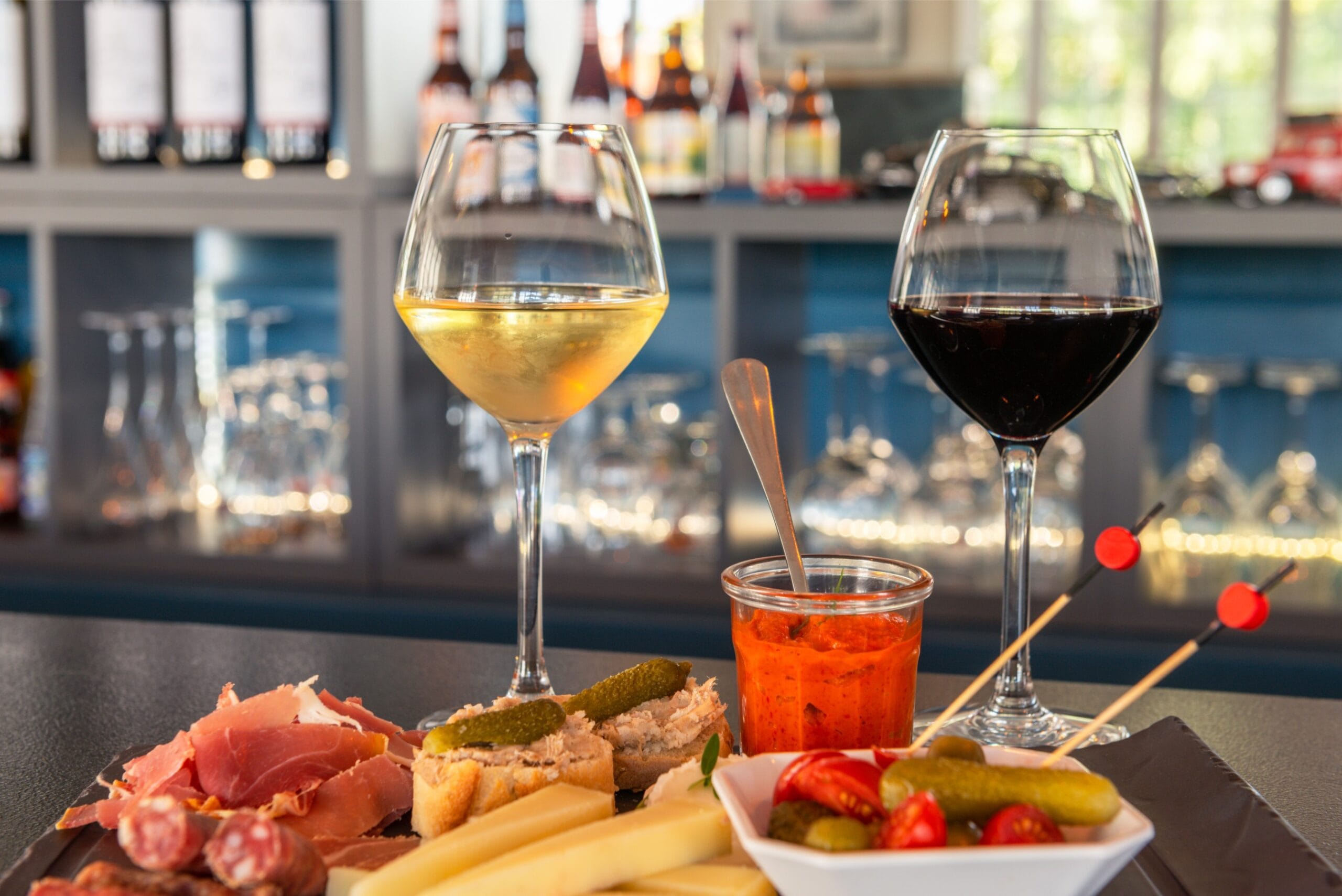
After the iodine, it’s time for comforting flavours. In a well-run foodie visit, charcuterie and cheeses are the stages that structure what follows: they bring fat, salt, and length in the mouth. You taste by taking your time, asking for a thin slice, looking for balance with a suitable bread. Bread is not just a support: it plays on texture and the perception of aromas.
On the cheese side, the interest is to compose a contrasting mini-tasting: a softer, more milky paste, a more matured paste, possibly a more distinctive offering. The aim isn’t to impress, but to find the trio that suits you. On the charcuterie side, you can aim for artisanal quality, minimally processed pieces, and thin slices that allow you to taste without saturating the palate.
Fruits, vegetables, herbs: the season directly on the plate
The foodie visit really comes alive when you linger over the colours and scents of the fruit and vegetable stalls. You read the season at first glance: tomatoes that smell of the sun when they are ripe, crunchy salads that announce lighter meals, citrus that awakens winter, summer fruits that call for simple desserts.
Fresh herbs, for their part, give an idea of immediate cooking: a bunch of aromatics is enough to transform a fish, a pan of vegetables or a salad. It’s also here that you understand the importance of the gesture: choosing, smelling, comparing, and letting yourself be inspired by a recipe you’ll improvise in the evening.
Sweet pause: pastries, treats and small pleasures to take away
A foodie visit often ends on a sweet note, but you can also place it in the middle, like a breath. At the halls, the sweet has this counter quality: you see, you choose, you give in. The ideal is to take a share to share, or a small treat that doesn’t cut the appetite for what follows.
The dessert then becomes an immediate souvenir: a bite enjoyed on the way back, or a package carefully carried to prolong the visit at home. Here again, the rule is simple: favour freshness, seasonal products, and clean textures (crisp, soft, melting) that make all the difference.

Accompanied foodie visit: turning the market into an experience
If you want to go further than a simple stroll, guided tours and tasting routes give another dimension to the discovery. You gain a thread to follow, anecdotes, and above all a coherent selection of tastings. It’s a good choice when you’re coming for the first time, or when you want to understand the local culinary identity beyond the obvious products.
For a structured experience around an itinerary and foodie stops, you can consult The flavours trail – Meet at the green kiosk …, which puts the emphasis on meeting and tasting as you go through the market.
Depending on your желания and availability, other formats exist: Guided tour – Flavours trail offers a guided approach designed to discover the specialities and good addresses.
A useful alternative if you’re looking for a service associated with a pass and practical organisation : Guided tour – Flavours trail, with clear information to plan your outing.
And if you like the idea of a city stroll punctuated by tastings of local products, this option may suit a more walking pace: Foodie stroll in La Rochelle with tasting of ….
Compose your basket: a La Rochelle menu in 5 elements
To leave with more than just memories, here is a simple way to compose a coherent basket, without overloading:
1) A seafood product ready to eat (or easy to prepare): a few oysters, a seafood terrine, a portion of fish suited to a short cooking time.
2) A good bread: to accompany, mop up, build bites.
3) A cheese: choose it according to your tolerance for strong flavours, and ask for the best tasting temperature.
4) A seasonal vegetable or fruit: to bring freshness and balance.
5) A sweet treat: small but memorable, to finish the meal.
This logic makes it possible to improvise a lunch or dinner without stress. And above all, it respects the spirit of the market halls: simple products, well chosen, and showcased without artifice.
Practical tips to enjoy without rushing
For a successful foodie visit, the key is the tempo. Arrive early enough to avoid the crowds, but keep time: the exchanges are part of the pleasure. Bring an insulated bag if you buy fragile products, and don’t hesitate to ask for storage or pairing advice (bread, cheese, wine, condiments). Also think about balancing tastings: alternate iodine, fat, acidity, sweetness. A little water between stops helps keep the palate neutral.
Your hotel in Châtelaillon-Plage
Finally, don’t seek exhaustiveness. A memorable foodie visit often comes down to three or four striking discoveries rather than an accumulation. The aim is to leave with a desire: to come back, to try another season, to follow another thread.
Extend the day around La Rochelle: getaway ideas
Once the basket is full and the taste buds satisfied, it is tempting to prolong the experience by getting some air on the coast. The region lends itself particularly well to chaining market + sea: you buy, you stroll, you picnic, you enjoy a changing light. For ideas for outings suited to everyone, discover Family beaches of Charente-Maritime.
If you like to move after eating well, a pleasant option is to head out on a two-wheeled loop: a coastal route to do by bike helps balance indulgence and fresh air.
For a very postcard-perfect touch of the department, you can also look for these fishing huts on stilts: a discovery of the famous carrelets extends the maritime atmosphere felt at the stalls.
And if you have a curious soul, the coastal sentinels give a perfect goal for an outing: Discover the lighthouses of Charente-Maritime allows you to turn the afternoon into a mini-adventure.
Where to sleep for a foodie getaway between market and ocean
To fully enjoy the market halls without rushing, the ideal is to plan one or two nights on the coast, so you keep time for the market, a walk in the fresh air, and an improvised meal with your purchases. If you’re looking for a practical address to organise your stay and get around easily, you can book via the dedicated booking page.

And for those who want to turn the foodie visit into a moment for two — market in the morning, a walk at sunset, a simple and good dinner — an idea for inspiration can be found here: a getaway designed for couples.
Returning to the market halls: the best reason is the next season
A successful foodie visit leaves a mark: the memory of a perfect oyster, a cheese chosen at the right stage of ripening, a fruit that truly tastes as it promises, a cooking tip mentally noted for next time. The market halls are rediscovered as the seasons go by, because the selection changes, because tastes evolve, and because you learn to choose better.
The right method is ultimately very simple: come early, look a lot, taste a little, buy better. And leave with the impression of having touched the essential: a city and its terroir, brought together in one place, within reach of hand and palate.