
Walk along La Rochelle's Old Port
old port la rochelle
Arriving at the Vieux-Port: the first breath facing the Atlantic
As soon as you emerge onto the quays, everything falls into place: the skyline, the slap of moorings, the gentle murmur of the terraces. A stroll along La Rochelle's Vieux-Port often begins with that simple moment when you slow down without even noticing. The port is not just a backdrop: it's a living stage, with its comings and goings, shifting reflections and perspectives that recompose with every step.
To warm up, the ideal is to choose a time when the light works on the façades: early morning for crisp clarity, or late afternoon when the stones take on warmer tones. And even if you arrive with an itinerary in mind, the Vieux-Port has a way of making you zigzag: a boat draws the eye, an alley looks promising, a musician holds you for a few minutes. The pleasure here is precisely not locking everything down.
The two towers: a landmark, a gateway to the maritime imagination
It's impossible to walk along the Vieux-Port without looking up at its two sentinels: the Saint-Nicolas Tower and the Chaîne Tower. They frame the harbour entrance like a monumental gate, instantly giving the walk a historical dimension. You feel the continuity between yesterday's merchant city and today's pleasure port: same stones, same defensive lines, but a shoreline use completely reinvented.
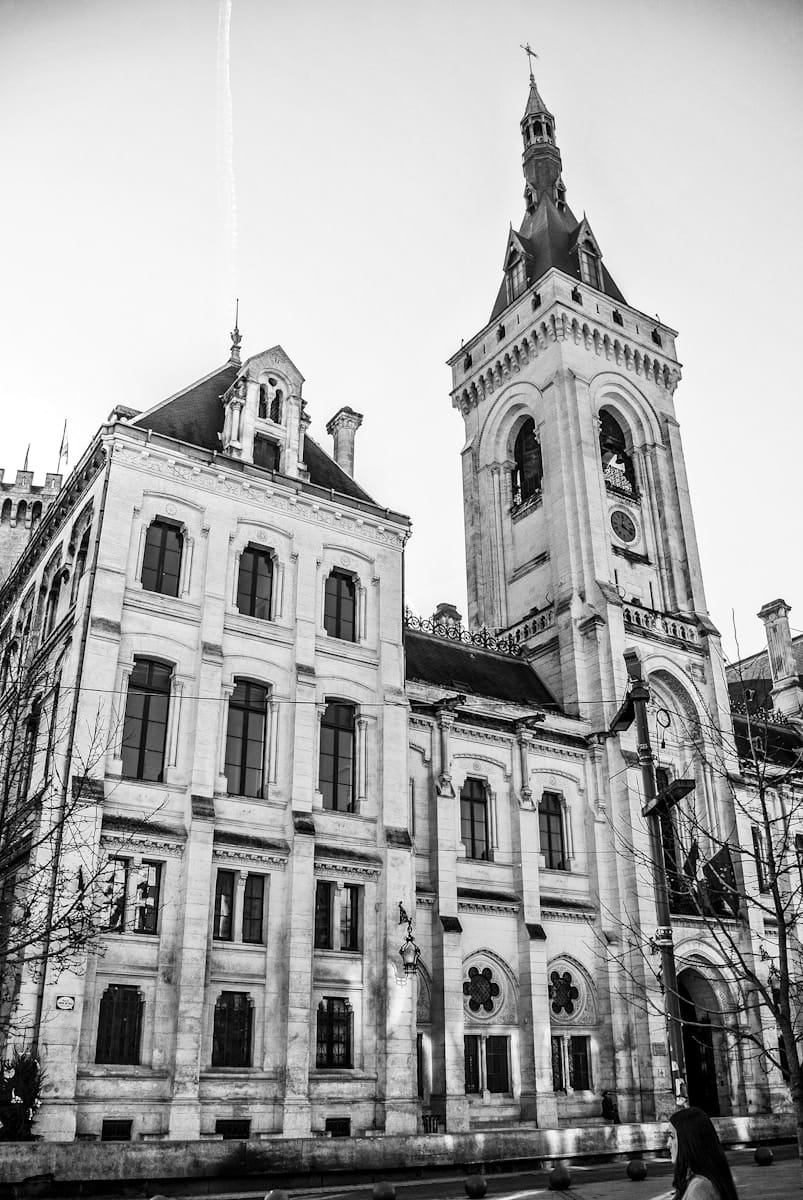
Their presence structures the stroll: they serve as a starting point, a return point, a meeting point. You can walk the quays always keeping one tower in sight, like a guiding thread. And at each stop, a new detail is revealed: the angle of a rampart, the shadow of an arch, a reflection of an antenna on the water, the silhouette of a sailing boat passing just on the axis between the two towers.
Quai Duperré and the terraces: lingering without guilt
Quai Duperré is one of the places where a walk turns into an art of living. You walk there to the rhythm of tables, conversations, coffee aromas, clinking crockery. The port is also meant to be admired seated: it's a local obviousness. Taking time is not a parenthesis; it's a way of visiting.
If you like to punctuate your walk with well-timed pauses, you can spot places and atmospheres thanks to a selection of cafés with a particularly pleasant atmosphere. This helps to choose according to your mood for the day: a sunlit terrace, a more discreet corner, a direct view of the masts, or a shelter when the wind rises.
A small walking tip: position yourself so you can see the movement. On the Vieux-Port, everything moves gently: the sailing boats pivot on their moorings, clouds glide, passers-by make up a continuous ballet. A ten-minute pause easily becomes half an hour, without it feeling like wasted time.
Your hotel in Châtelaillon-Plage
The walking route: vary the quays, play with the viewpoints
The magic of the Vieux-Port is that it offers several walks in one. You can follow the edge closely, or cut through the adjacent streets to return to the quay from a different angle. Alternating allows you to see the city breathe behind its seafront: arcades, small squares, shop windows, grand hotel entrances, quieter passages.
For those who like to walk with clear landmarks (and pick up a few must-see ideas along the way), this reading can feed your itinerary: La Rochelle on foot: from must-sees to treasures …. The Vieux-Port naturally fits in as an axis, a backbone, around which one can weave.
The simplest trick is to set an intention rather than a plan: follow the water, seek the most beautiful façades, photograph the reflections, note places to return to in the evening. In La Rochelle, the best routes are often those that leave room for the unexpected.
Market and port-town atmosphere: feeling La Rochelle in everyday life
The Vieux-Port is not a frozen postcard backdrop: it is crossed by local habits. You meet hurried locals, regulars doing their running loops, families heading to the historic centre, visitors who stop at every step. It is this overlay of rhythms that makes the walk so lively.
By day, the atmosphere is more urban: you hear bicycles, conversations, the echo of the streets. In the evening, the place becomes more harbour-like: the light falls, silhouettes stand out, reflections deepen. Between the two, there is that delightful moment when the terraces fill up and you can feel the day tipping towards softness.
To do with the family: a gentle, simple, flexible walk
Along the Vieux-Port, the stroll suits children well: you can walk in short bursts, stop often, play spotting the boats, watch the birds, count the masts, listen to the street performers. Distances are reasonable, interest is constant, and you can easily adapt the outing according to each person’s age and energy.
If you’re looking for ideas for peaceful, accessible outings, you can also pick from family activities designed to keep a relaxed pace. The advantage of the Vieux-Port is that it combines walking, observing and small rewards (an ice cream, a snack, a carousel a little further on) without needing a packed schedule.
In practice, allow some leeway: a child will stop in front of a boat as if before a miniature theatre, and they would be wrong to hurry. The walk then becomes a series of discoveries, not a distance to cover.
The best times for light: photograph without being a photographer
The Vieux-Port is a playground for photography, even with a smartphone. The lines are crisp, textures rich, the water acts as a mirror. To capture striking images, you often only need to watch two things: the direction of the sun and the position of the towers in your frame.
In the morning, the light is cooler, more graphic: perfect for silhouettes and contrasts. At the end of the day, the stones warm, shadows lengthen and the atmosphere becomes almost cinematic. And when the sky is overcast, don’t sulk: the clouds lend dramatic depth, and the colours of the port can come out differently, more subtly.
A simple exercise: take the same photo at three different times (morning, afternoon, evening). You’ll feel as if you’ve photographed three distinct harbours.
Walk, run, cycle: routes and paces around the Vieux-Port
The Vieux-Port is also a natural starting point for extending the stroll. Some prefer to stay on the quays and circle the water, others like to head off for longer walks. The city is particularly well suited to gentle travel: walking and cycling have an obvious place here.
For those looking to structure a more athletic or longer outing, this reference can be useful: Vieux-Port de La Rochelle – Hiking & cycling routes. It helps to place the harbour within a wider area, and to vary routes according to the time available.
In any case, keep a simple rule: at the Vieux-Port, it’s better to favour flexibility. It’s a busy, lively place, and the best way to enjoy it is to accept slowdowns, detours and spontaneous stops.
When the weather turns: continue the walk differently
La Rochelle has character, and so does the weather. A changeable sky is part of the Atlantic charm: you can start under bright sun and end in a brief shower, then find superb light a few minutes later. The Vieux-Port remains pleasant even when the weather is uncertain, provided you adapt your way of strolling.
Your hotel in Châtelaillon-Plage
In light rain, the harbour offers a very photogenic atmosphere: polished cobbles, reflections of signs, figures hurrying under umbrellas. If the weather becomes decidedly wet, the idea isn’t to give up, but to alternate outdoors with calmer pauses. To extend the gentle vibe nearby if the rain sets in, you can also consult quiet ideas to keep in reserve when the sky closes in.
The sensible move: take a lightweight waterproof layer. On the Atlantic, this is often enough to enjoy bright spells between showers.
Enjoy without overspending: simple pleasures around the harbour
The Old Port can be savoured very well without racking up expenses. The show is free: the boats, the towers, the performers, the sunsets, the quayside scenes. You can build a whole day from simple pleasures: walking, watching, photos, resting on a bench, a detour down an alley, returning to the harbour when the lights come on.
If you like good tips and accessible ideas, you will find inspiration via Free outings in. It’s a way to extend the walk without increasing the budget, while staying in the La Rochelle spirit: curious, free, and outward-looking.
One simple tip: pack a snack and a bottle of water. That allows you to stop wherever you like, when the place is beautiful, without relying on a schedule.
A few micro-adventure ideas along the quays
To make the walk more memorable, nothing beats a little personal quest. The Old Port is perfect for it, as it offers many details. You can, for example:
Spot the boat names and pick out those that tell a story (puns, nods, first names, maritime references). Find the best angle to include the towers in a reflection. Follow a colour theme (blue of hulls, ochre of the stones, white of the sails) and build your walk like a visual collection. Or set yourself a constraint: I only photograph details (ropes, cleats, portholes, varnished wood, shadows on the water).
If you like narrated walk formats, you can also take inspiration from Stroll through La Rochelle's Old Port – WeWard, which offers a promenade-oriented view and points of interest. The idea is not to follow a route to the millimetre, but to pick one or two suggestions that match your current mood.
Extend the day: stops around La Rochelle
The Old Port often makes you want to carry on. Because you've acquired a taste for a gentle pace, because you want some fresh air, because you feel good between town and sea. In that case, it can be pleasant to plan another stop along the coast, without going too far, to vary the scenery.
A simple idea is to head out to other parts of the coast, for example by planning an outing to discover Fouras starting from Châtelaillon-Plage. This allows you to compose a stay in several scenes: historic harbour, seaside atmosphere, more open views, and another way of sensing the Atlantic.
A walk that can also be enjoyed in the evening: when the harbour transforms
Returning to the Old Port after dinner, or simply at dusk, changes everything. The terraces take on a different tone, conversations become more hushed, and the lights render the town more intimate. The towers gain in mystery, the water grows darker, and the reflections become crisper.
In the evening, the walk no longer needs a purpose. You walk for the pleasure of walking, you stop for the pleasure of looking. It is often then that La Rochelle’s identity is felt best: an open, maritime, understatedly elegant city where you can stroll for a long time without growing tired.
Practical tips: make the walk smooth and enjoyable
A few simple elements greatly improve the experience. First, favour comfortable shoes: the cobbles and long stretches of quay are best savoured that way. Next, choose your timing: if you prefer a quieter stroll, aim for the morning; if you enjoy the buzz, the afternoon and late afternoon are ideal. Finally, leave yourself some mental leeway: the Old Port is a place that invites spontaneous pauses.
Your hotel in Châtelaillon-Plage
To find other outing ideas and routes at the city scale, you can also consult On a walk, a useful resource to extend the inspiration beyond the quays. This will help you link the harbour to other atmospheres: lanes, neighbourhoods, greener promenades, different viewpoints.
Where to sleep to make exploration easy: an ideal base on the seafront
If you are coming for several days and want to explore La Rochelle while enjoying a quieter base on the coast, staying nearby can make the trip more comfortable: fewer constraints, more freedom to choose your visiting times, and the possibility to alternate between town and seaside.
To organise your stay and book easily, here is a direct link to the booking page for your accommodation in Châtelaillon-Plage. A practical solution if you like days that combine urban strolls, pauses facing the ocean and returns to tranquillity.
What you take away when you leave: a sense of harbour, not just a visit
The walk along La Rochelle's Vieux-Port rarely leaves a touristy impression in the strict sense. You leave with something more sensory: the light on the stones, the sound of water against the hulls, the silhouettes of the towers, the taste of a coffee taken facing the masts, the feeling of having walked through a town that lives with its port rather than beside it.
It is a promenade you can repeat, and which never quite repeats itself. Depending on the time, the season, the weather, the company, the Vieux-Port tells a different story. And that is precisely why it makes you want to return: not to see again, but to relive.